Introduction
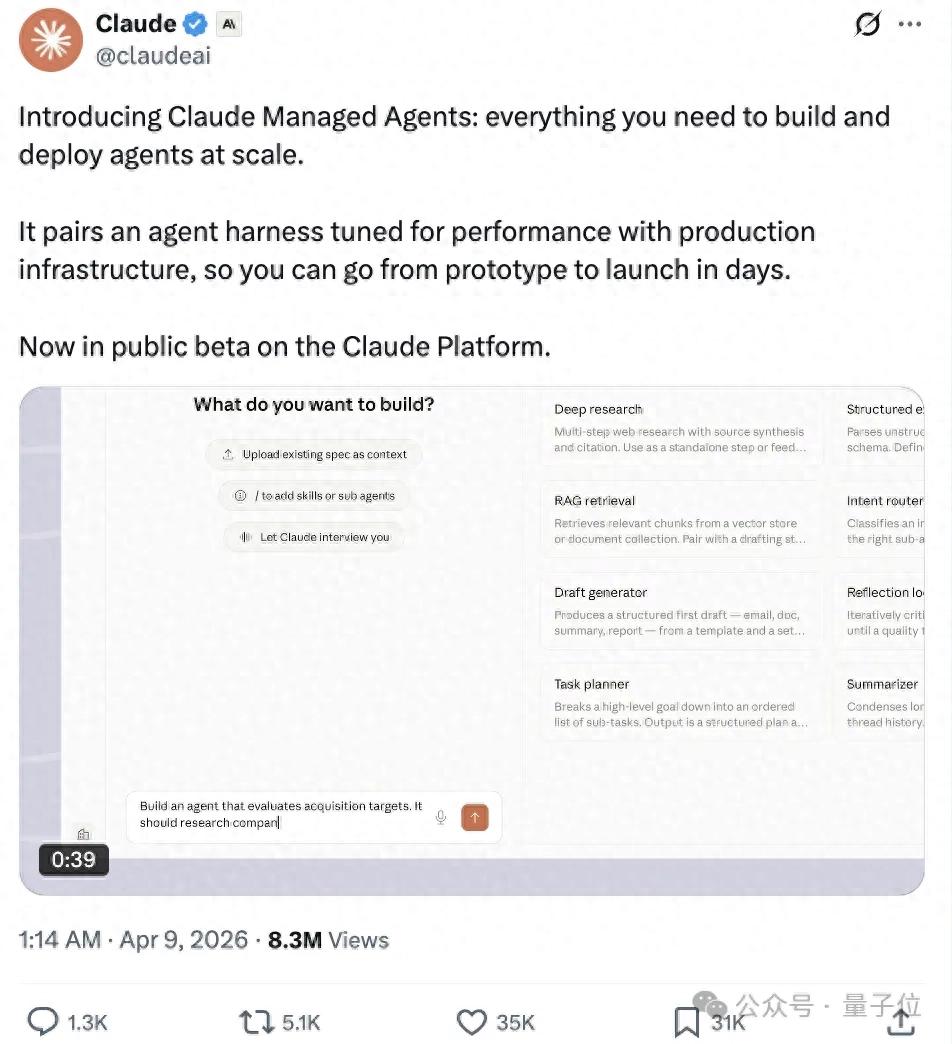
Recently, Claude launched its “Enterprise Edition” service, introducing Claude Managed Agents, which has quickly drawn attention from the open-source project “Multica”!
What are Claude Managed Agents?
Claude Managed Agents is a modular API suite designed to help enterprises and teams scale the construction and deployment of cloud-hosted intelligent agents. It deeply integrates a performance-optimized agent runtime framework with production-grade infrastructure.
Users can simply describe their needs in natural language or upload a YAML configuration file to define the intelligent agent they want to run, set corresponding constraints, and the platform handles the rest of the operational and infrastructure-related complexities.
Key Features
The core features of Claude Managed Agents include:
- Production-grade agent execution capability: Sandbox isolation, authentication, and tool invocation are all configured for you.
- Long-term autonomous operation: Agents can run autonomously for hours, preserving progress and results even if the connection is interrupted.
- Multi-agent collaborative orchestration: Supports agents autonomously creating and scheduling other agents for parallel processing of complex tasks.
- Reliable governance system: Allows agents to access real business systems, with built-in permissions, identity management, and execution tracking for safety and compliance.
Previously, Anthropic focused on providing models to users, and aside from Claude Code and Cowork, did not open its infrastructure for users to run self-built agents. Now, Anthropic clearly aims to tackle both aspects.
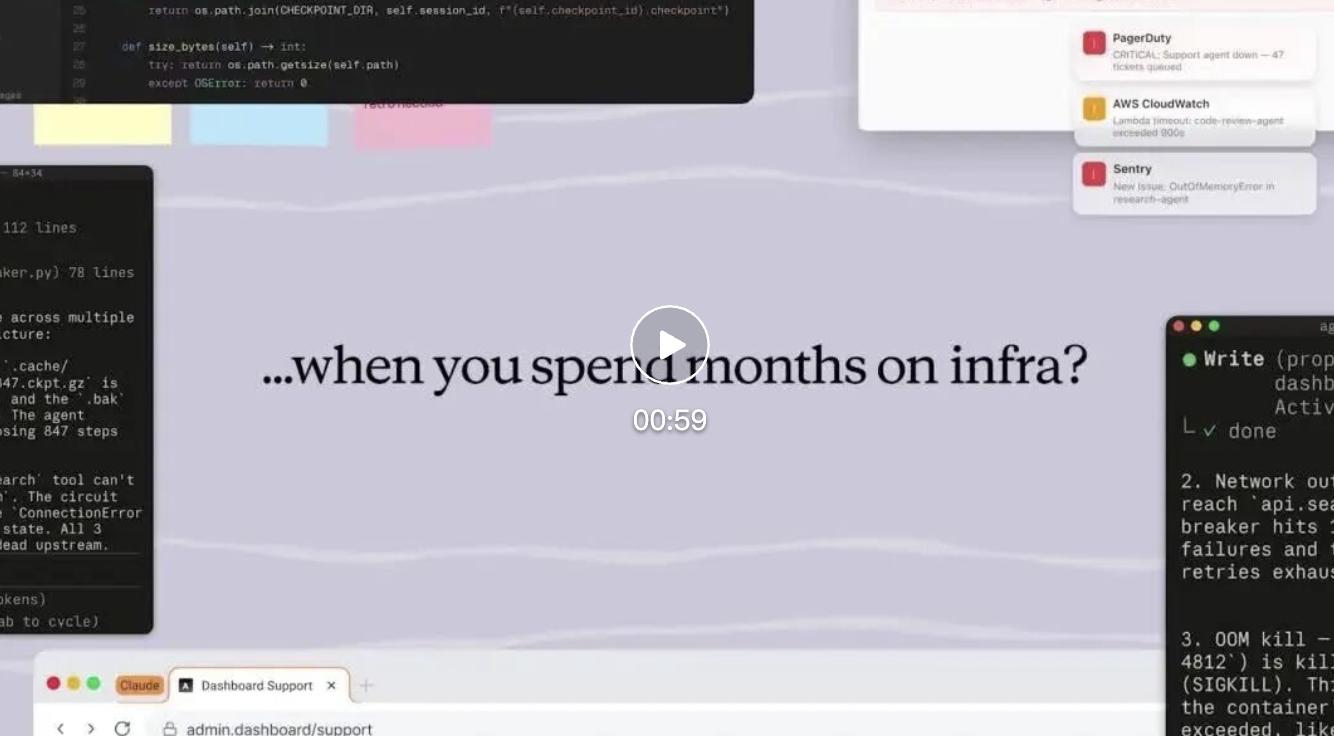
To successfully implement agents in production, it is essential to overcome technical challenges such as sandboxed code execution, checkpoint mechanisms, credential management, permission delineation, and end-to-end tracking. In the past, enterprises often spent months just building the necessary infrastructure.
Claude Managed Agents directly resolves these complex issues for users.
Users only need to define the agent’s task objectives, available toolsets, and operational constraints, while the platform’s infrastructure handles the subsequent scheduling. Its built-in orchestration framework automatically decides when to invoke tools, manages context strategies, and formulates recovery plans after failures.
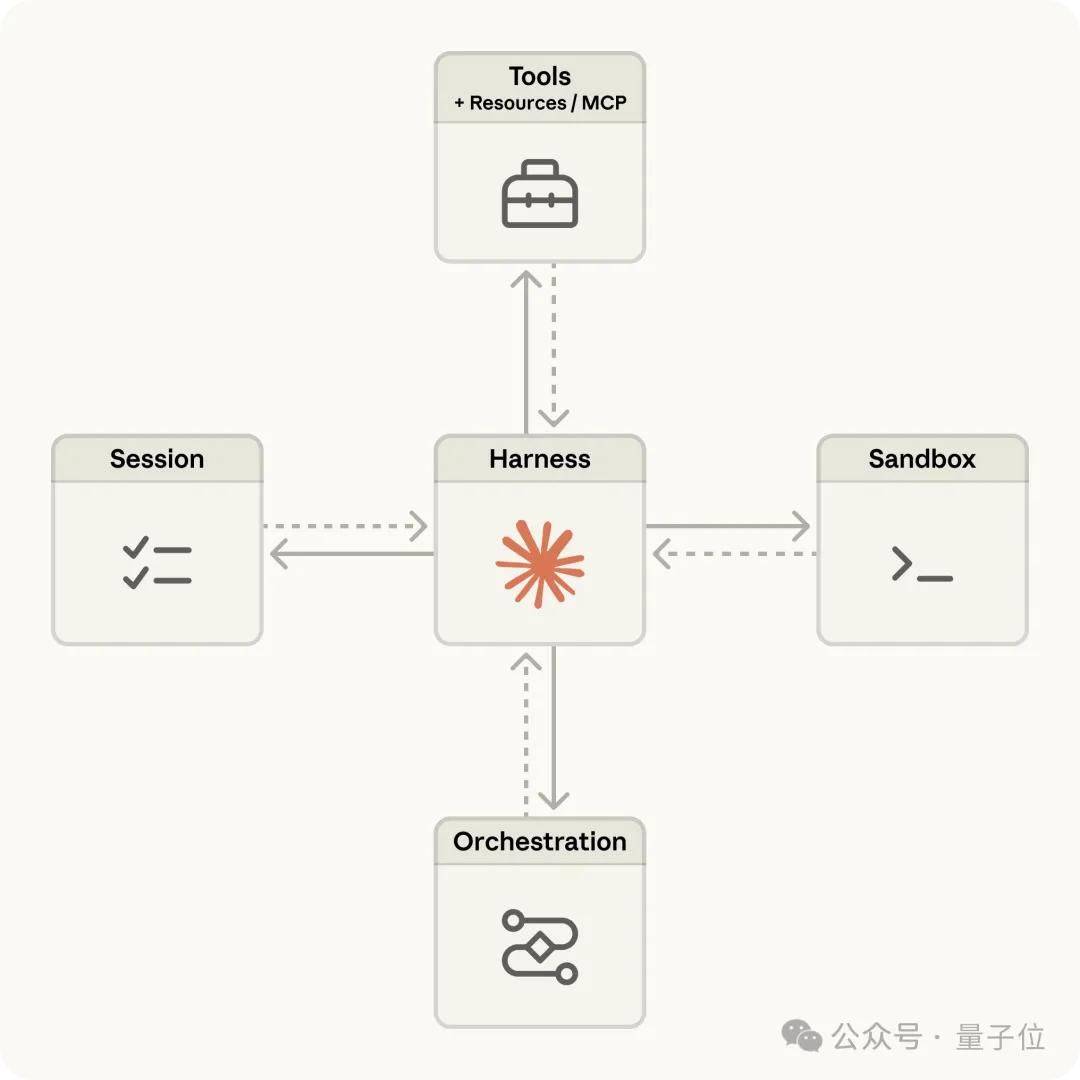
As a dedicated managed service for Claude, Claude Managed Agents allows users to set goals and success criteria, with Claude autonomously evaluating and iterating until objectives are met. For more granular control, it also supports the traditional “prompt-response” interaction model.
In internal tests for generating structured documents, Claude Managed Agents achieved up to a 10% higher success rate compared to the standard prompt interaction model, especially excelling in high-difficulty tasks.
Session tracking, integrated analytics, and fault diagnosis guidance are built directly into the Claude console, allowing users to view each tool invocation, decision-making process, and the specific reasons for any issues.
However, it should be noted that some features of Claude Managed Agents are currently in a limited research preview phase, such as advanced memory tools, multi-agent collaborative orchestration, and autonomous evaluation iterations.
Anthropic has indicated that many teams have already achieved a tenfold increase in delivery speed across various production use cases using Claude Managed Agents. Examples include coding agents that can read codebases, plan fixes, and submit pull requests; productivity agents that can join projects, claim tasks, and collaborate with team members; and financial and legal agents that can process documents and extract key information.
The Notion team shared their practical application:
Teams can directly delegate work tasks to Claude within their collaboration platform (this feature is currently in beta testing within Notion’s custom agent module). Engineers efficiently deliver code, while knowledge workers quickly create websites and presentations with it. Dozens of tasks can progress in parallel, and team members can collaborate around the results generated by the agents.
Pricing
For enterprises, the most pressing concern is pricing. Claude Managed Agents charges based on two dimensions: Token usage and session runtime.
The first part of the token cost is charged according to the platform’s standard token pricing rules. If a network search is triggered during a session, it costs $10 for every thousand searches.
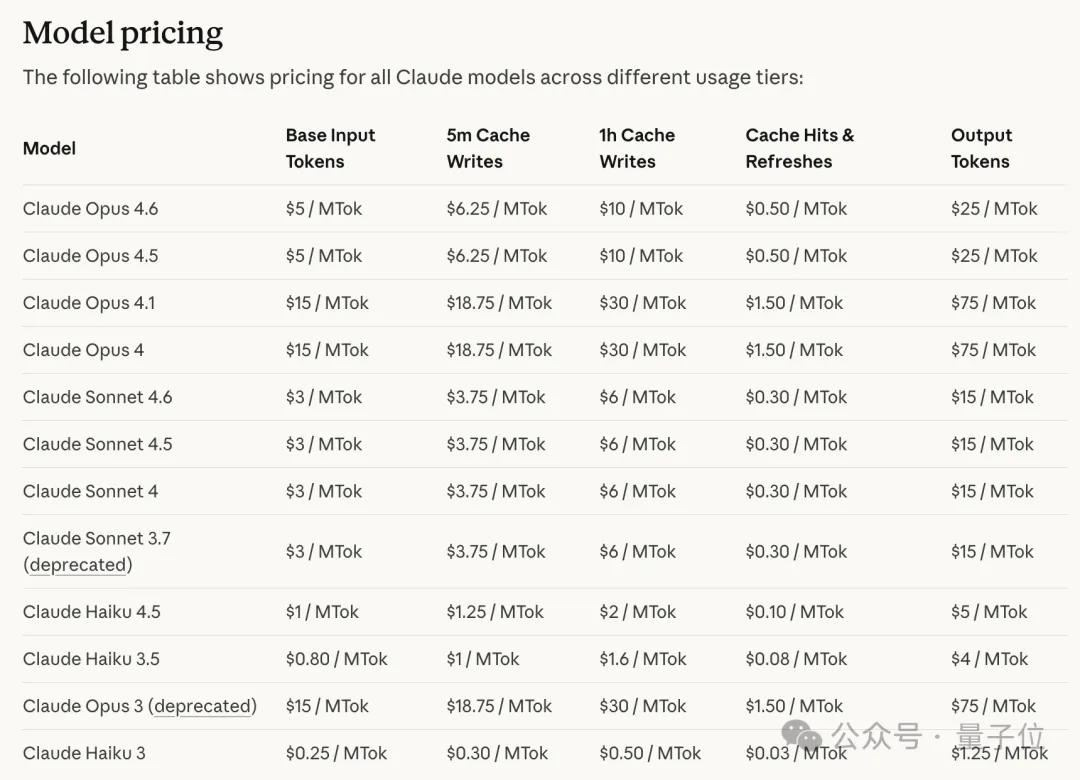
The active runtime of the agent is billed separately at $0.08 per session hour. Idle periods when the agent is waiting for user input or tool responses are not charged.
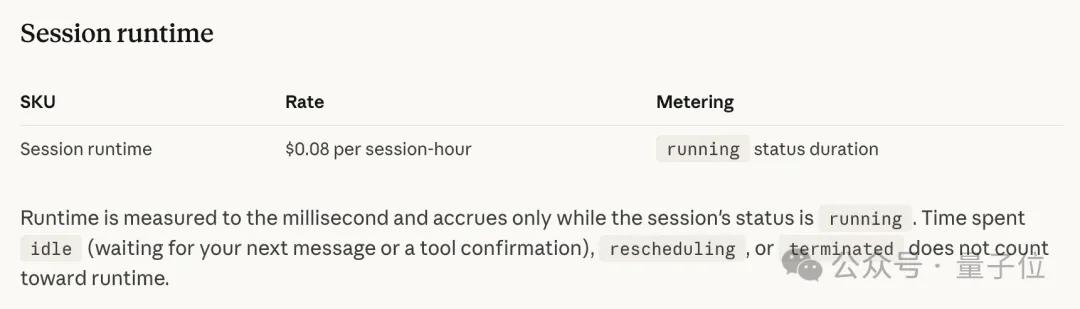
Currently, Claude Managed Agents is officially available for use on the Claude platform. Developers can also utilize the latest Claude Code and the built-in claude-api Skill to develop applications related to managed agents. Simply enter the command “start onboarding for managed agents in Claude API” to begin.
Open Source Multica
Now, let’s look at the core features of the open-source Multica:
- Agents as collaborative teammates: Agents can autonomously take on tasks, write code, report blocking issues, and synchronize task status in real-time.
- Full lifecycle autonomous execution: Once configured, it can run without maintenance, supporting task queuing, claiming, execution, and completion/failure management, with real-time progress updates via WebSocket.
- Skill accumulation and reuse: Each solution is transformed into reusable Skills shared across the team. Skills continuously accumulate for deployment, database migration, code review, etc.
- Unified computing runtime: A single console can manage all computing resources, compatible with local daemons and cloud runtimes, automatically identifying available command-line tools (CLI) and supporting real-time monitoring.
- Multi-workspace isolation management: Organizes work by team, with workspace-level isolation. Each workspace has its own agents, issues, and settings.
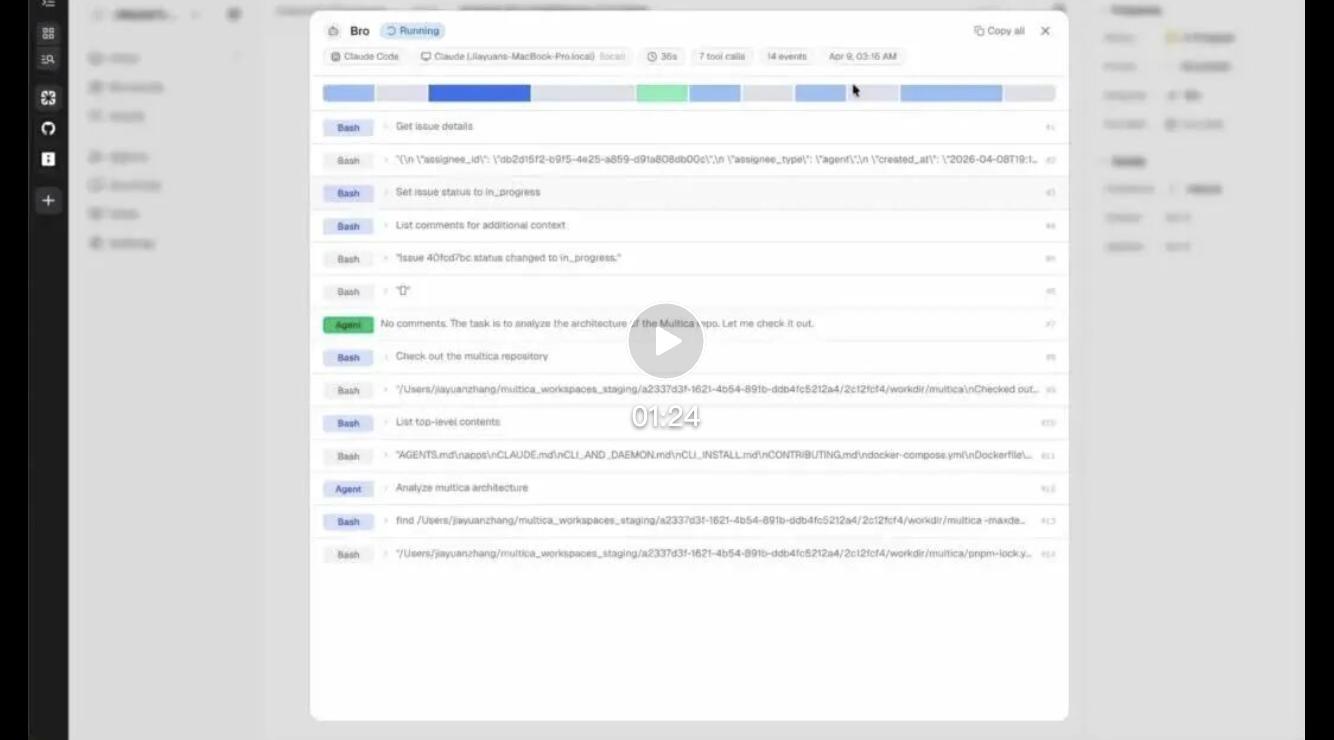
Here is a video demonstration:
Conclusion
Multica was actually released earlier than Claude Managed Agents. Jiayuan (JY) Zhang, a core contributor to Multica, previously founded the AI vertical search engine Devv.ai for developers.
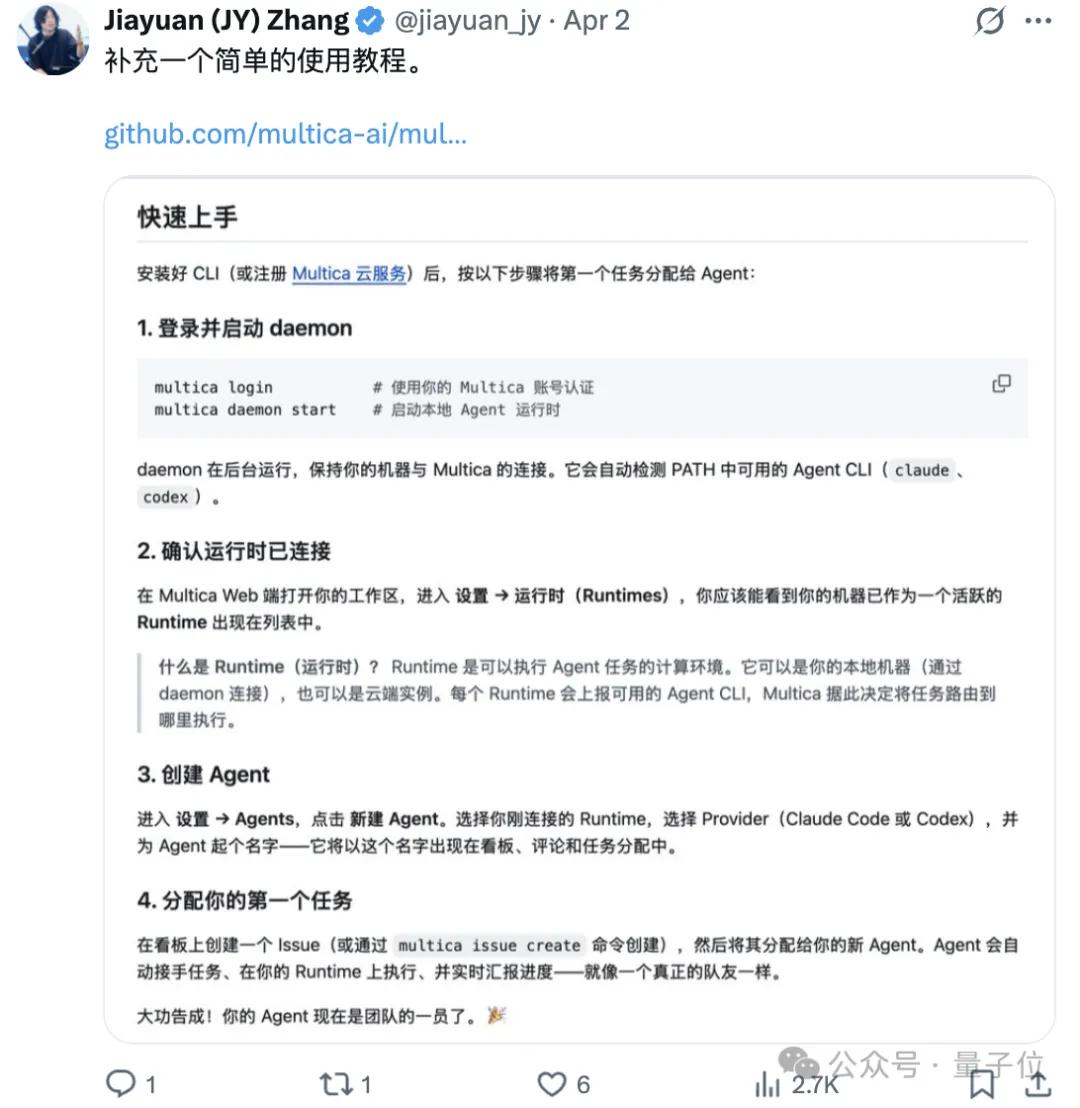
Jiayuan (JY) Zhang stated that the team initially created it to solve the problem of “knowledge sharing between teams and the lack of a central hub for multi-agent collaboration” within their own team.
For usage, the GitHub repository also has detailed tutorials:
References:
[1] https://claude.com/blog/claude-managed-agents
[2] https://github.com/multica-ai/multica?tab=readme-ov-file
Comments
Discussion is powered by Giscus (GitHub Discussions). Add
repo,repoID,category, andcategoryIDunder[params.comments.giscus]inhugo.tomlusing the values from the Giscus setup tool.